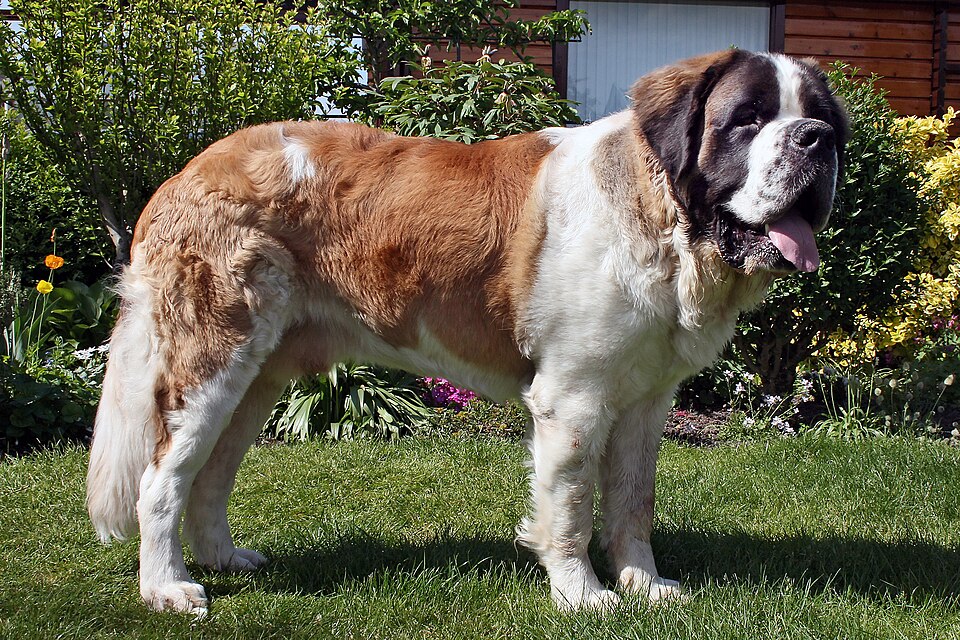
A dog this size shouldn't be dying at 8 to 10 years old, but that's the typical lifespan for a Saint Bernard — add in constant drooling, real bloat risk, and a genuine chance of four-figure vet bills for hip dysplasia or bone cancer, and the 'gentle giant' image sold at pickup rarely matches the true lifetime cost.
9.3years, median
3.2 years below the all-dog median of 12.5.
Measured, not estimated: the middle age at death across 584,734 UK dogs, 284,734 of them deceased. Based on 1,638 dogs of this breed (listed in the study as "St Bernard"). 95% confidence interval 9 to 9.8 years. Half lived longer than this, half did not. UK dogs, so treat it as the best available figure rather than a promise about yours.
In the same study, large breeds as a group had a median of 11.9 years and medium-muzzled breeds 12.8. This breed is large and medium-muzzled.
McMillan et al. 2024, Scientific Reports 14:531 — open access · CC BY 4.0Health tests to ask the breeder for
Saint Bernard Club of America sets the tests a Saint Bernard needs for a CHIC number in the OFA's open database. A CHIC number means the tests were done and the results are public. It does not mean the dog passed them: ask for the results for both parents, or look them up yourself on ofa.org.
- Hip Dysplasia (OFA Evaluation or PennHIP Evaluation, minimum 24 months)
- Elbow Dysplasia (OFA Evaluation, minimum 24 months)
- Eye Examination by a boarded ACVO Ophthalmologist (minimum 22 months)
- Cardiac Evaluation (Congenital Cardiac Exam by a boarded cardiologist, Advanced Cardiac Exam, or Basic Cardiac Exam by a boarded cardiologist; minimum 24 months)
- Degenerative Myelopathy (DM) DNA test
When to spay or neuter a Saint Bernard: the UC Davis study of 35 breeds has a suggested guideline for the breed. For males it is any age. For females, 6 months or later; the authors suggest well beyond a year. The spay and neuter page has the numbers behind it and what the guidelines say for a dog this size.
- Autoimmune Thyroiditis (OFA evaluation)
Test names as the club lists them; checked September 2026. OFA CHIC breed page. How to use this at the breeder: check a breeder.
Adopt a Saint Bernard near you
Shelters and rescues list Saint Bernards and Saint Bernard mixes on Petfinder. Enter a ZIP code to see who is waiting within 100 miles.
Listings come from Petfinder and open there. Petipedia does not take part in adoptions and earns nothing from them.
Living with a Saint Bernard
Saint Bernards are genuinely calm and patient, not high-energy dogs, but living with one means near-daily drool cleanup, heavy shedding, and frequent ear cleaning because of the floppy ears. The bigger issue is logistics and grief on a short timeline: this is a dog that eats, costs, and needs handling like a small horse, for a life that ends early even measured against other large breeds.
Health you should know about
- Gastric dilatation-volvulus (bloat) — a sudden, life-threatening stomach twist that deep-chested giant breeds like the Saint Bernard are at significantly elevated risk for compared with the average dog.
- Hip dysplasia — malformed hip joints, extremely common in giant breeds carrying this much body weight.
- Osteosarcoma — an aggressive bone cancer disproportionately seen in giant breeds, often requiring amputation and chemotherapy.
- Cervical vertebral instability ('wobbler syndrome') — spinal cord compression in the neck that causes an unsteady gait and can progress to weakness.
Read the full Dog Care Guide first — costs, daily time, and everything a dog needs before you choose a breed.
Naming a Saint Bernard? German dog and cat names, 88 of them, with what they mean.
Sources — 3 references
Last reviewed October 2026. 3 sources listed below. Written and maintained by Petdeals.io. General care information, not veterinary advice — for a sick animal, call a vet.