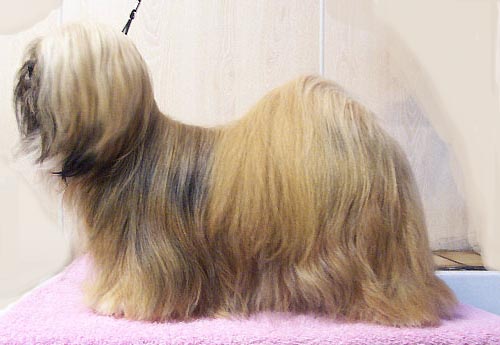
Lhasa Apsos were bred as indoor watchdogs for Tibetan monasteries, not laid-back lapdogs, and breed sources are direct that they have low tolerance for rough handling and will nip at children who don't treat them gently — a poor match for toddlers despite the appealing lapdog looks.
14years, median
1.5 years above the all-dog median of 12.5.
Measured, not estimated: the middle age at death across 584,734 UK dogs, 284,734 of them deceased. Based on 9,939 dogs of this breed. 95% confidence interval 13.9 to 14.2 years. Half lived longer than this, half did not. UK dogs, so treat it as the best available figure rather than a promise about yours.
In the same study, small breeds as a group had a median of 12.7 years and flat-faced breeds 11.2. This breed is small and flat-faced.
McMillan et al. 2024, Scientific Reports 14:531 — open access · CC BY 4.0Health tests to ask the breeder for
The American Lhasa Apso Club has no health testing requirements for its member breeders, and the breed has no CHIC program. The screens commonly available for the breed, which the club does not endorse, are an eye exam (CAER), a patellar luxation check, and the PRA4 DNA test. Ask what the breeder screens for anyway, and ask to see the results, not the promise.
Test names as the club lists them; checked September 2026. OFA CHIC breed page. How to use this at the breeder: check a breeder.
Adopt a Lhasa Apso near you
Shelters and rescues list Lhasa Apsos and Lhasa Apso mixes on Petfinder. Enter a ZIP code to see who is waiting within 100 miles.
Listings come from Petfinder and open there. Petipedia does not take part in adoptions and earns nothing from them.
Living with a Lhasa Apso
Lhasa Apsos are independent, watchful little dogs, closer in temperament to a small guardian breed than a cuddly toy — they bond tightly with their own family but are often standoffish or suspicious of strangers, exactly as they were bred to be. The floor-length coat most people picture requires daily brushing and frequent bathing to avoid matting; most pet owners keep it clipped short year-round because the full show coat isn't realistic to maintain alongside a normal routine.
Health you should know about
- Progressive retinal atrophy — inherited, progressive blindness with no treatment; DNA and eye testing are available for breeding stock.
- Renal dysplasia — a hereditary kidney malformation usually diagnosed between 6 months and 2 years old, with no cure, only supportive management.
- Hereditary cataracts and keratoconjunctivitis sicca (dry eye) — both reported eye conditions requiring lifelong management or surgery.
- Patellar luxation — a kneecap disorder common in small breeds, ranging from mild to requiring surgical correction.
When to spay or neuter: the guidelines split at 45 pounds grown, five to six months under it and after growth is complete over it, and the UC Davis study gives a guideline by breed for 35 breeds. The spay and neuter page has both, and the two weeks after.
Eye ulcers: flat-faced breeds as a group had over 11 times the risk of crossbred dogs in a study of more than 100,000 dogs in England. A squint or a half-closed eye is a same-day call to the vet. The eye ulcer page has the signs, and the eye drops that make an ulcer worse.
Itchy skin: Merck lists the Lhasa Apso among the breeds prone to atopic dermatitis, a lifelong allergy to things like pollen, mold and dust that usually starts between six months and three years of age. Why does my dog keep itching? has how vets tell it apart from fleas, mites and food allergy, and the treatments.
Read the full Dog Care Guide first — costs, daily time, and everything a dog needs before you choose a breed.
Naming a Lhasa Apso? Chinese and Tibetan dog names, 79 of them, with what they mean.
Sources — 4 references
Last reviewed October 2026. 4 sources listed below. Written and maintained by Petdeals.io. General care information, not veterinary advice — for a sick animal, call a vet.