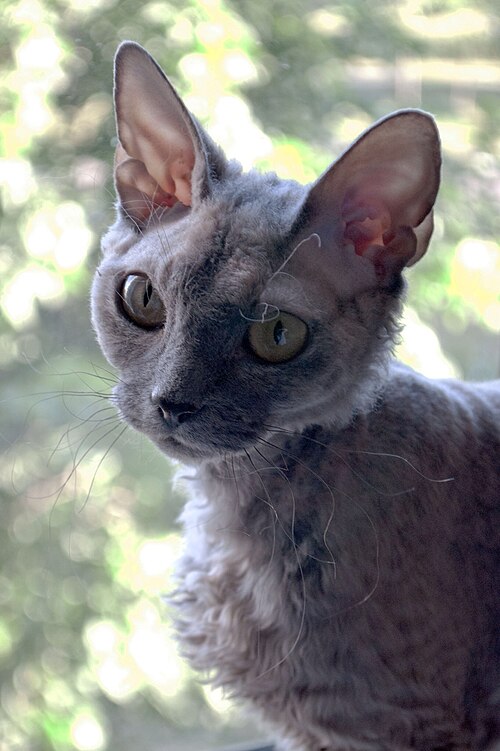
Devon Rex are talkative and constantly want to be involved in whatever you're doing, including waking you up, and despite low shedding they are not actually hypoallergenic — the allergen (Fel d 1) is in their skin and saliva, not their sparse hair, so people with real cat allergies still react to them.
Health tests to ask the breeder for
There is no CHIC program for cats. These are the DNA and screening tests that the testing laboratories and cat health bodies name for the Devon Rex. A breeder who tests will show the certificates; a DNA result of "clear" for one variant is not a guarantee against the disease.
- Congenital Myasthenic Syndrome (COLQ) DNA test (UC Davis VGL / Langford Vets) screens for congenital muscle weakness in Sphynx and Devon Rex
- Burmese Hypokalaemia (WNK4) DNA test (UC Davis VGL / Langford Vets) screens for episodic low-potassium muscle weakness
- PKD1 DNA test (UC Davis VGL / Langford Vets) screens for autosomal-dominant polycystic kidney disease (low prevalence; VGL lists Devon Rex for PKD1)
- Echocardiogram (heart ultrasound) by a veterinary cardiologist, repeated regularly for breeding cats screens for hypertrophic cardiomyopathy (HCM); no DNA test covers this breed (GCCF lists Devon Rex as HCM-predisposed)
When to spay or neuter: by five months, whatever the breed. That is the one answer the AVMA, the feline practitioners and AAHA all give, and the spay and neuter page has why, and the two weeks after.
Sources: vgl.ucdavis.edu · vgl.ucdavis.edu · vgl.ucdavis.edu · langfordvets.co.uk. Checked September 2026. Check a breeder has the questions.
Adopt a Devon Rex near you
Shelters and rescues list Devon Rexs and Devon Rex mixes on Petfinder. Enter a ZIP code to see who is waiting within 100 miles.
Listings come from Petfinder and open there. Petipedia does not take part in adoptions and earns nothing from them.
Living with a Devon Rex
Devon Rex are constant companions — chatty, mischievous, and prone to 'helping' with everything you do, which some owners love and others find exhausting. Their fine, curly coat sheds very little but still needs gentle regular brushing and occasional bathing to manage skin oil buildup, and prospective owners with real allergies should not assume this breed will be any easier on their sinuses than a fully-coated cat.
Health you should know about
- Hereditary myopathy — a mutation in the feline COLQ gene disrupts the neuromuscular junction, causing progressive muscle weakness (typically starting in the head and neck) that can include head-bobbing, an odd stepping gait, and — in the more serious cases — swallowing difficulty and megaesophagus, which carries a real risk of aspiration or sudden death. Signs usually begin between 3 and 23 weeks old and often stabilize by about 9 months; it is autosomal recessive, and reported cases in the literature are rare, though this may reflect underdiagnosis.
- Skin conditions, including hereditary hair loss (congenital hypotrichosis) and a predisposition to greasy skin/Malassezia yeast dermatitis, tied to the same curly-coat gene mutation.
- Patellar luxation (kneecap dislocation) has been reported as a concern in the breed, as in several other small, lightly-boned cat breeds.
Read the full Cat Care Guide first — costs, daily time, and everything a cat needs before you choose a breed.
Naming a Devon Rex? British dog and cat names, 89 of them, with what they mean.
Sources — 4 references
Last reviewed October 2026. 4 sources listed below. Written and maintained by Petdeals.io. General care information, not veterinary advice — for a sick animal, call a vet.