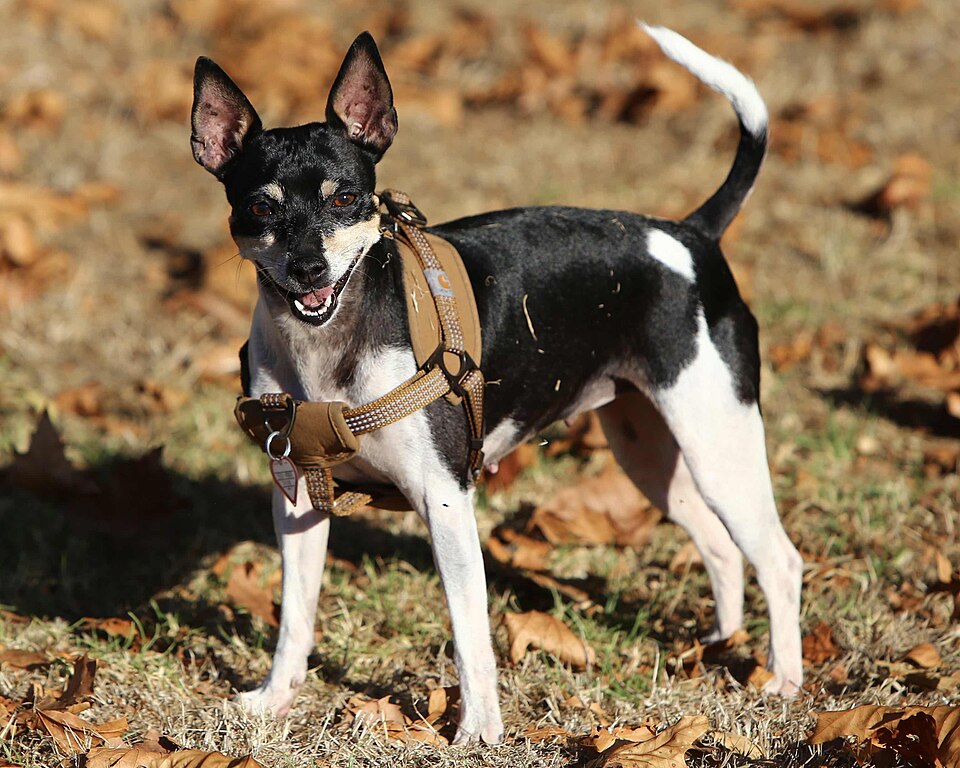
Rat Terriers were bred as working vermin-hunters and keep a genuinely high prey drive and farm-dog energy level in a body small enough to look like a lapdog in a photo — new owners regularly underestimate how much daily exercise and secure fencing this breed needs, and small pets in the house shouldn't be trusted around it unsupervised.
Health tests to ask the breeder for
Rat Terrier Club of America sets the tests a Rat Terrier needs for a CHIC number in the OFA's open database. A CHIC number means the tests were done and the results are public. It does not mean the dog passed them: ask for the results for both parents, or look them up yourself on ofa.org.
- Cardiac Evaluation
- Hip Dysplasia (OFA Evaluation or PennHIP Evaluation)
- Patellar Luxation (OFA Evaluation)
- Legg-Calve-Perthes (OFA radiographic evaluation)
- Primary Lens Luxation (PLL) DNA test
When to spay or neuter: the guidelines split at 45 pounds grown, five to six months under it and after growth is complete over it, and the UC Davis study gives a guideline by breed for 35 breeds. The spay and neuter page has both, and the two weeks after.
- Eye Examination by a boarded ACVO Ophthalmologist
- Congenital Deafness (BAER test)
- Elbow Dysplasia (OFA Evaluation)
- Progressive Retinal Atrophy (PRA / prcd-PRA) DNA test
Test names as the club lists them; checked September 2026. OFA CHIC breed page. How to use this at the breeder: check a breeder.
Adopt a Rat Terrier near you
Shelters and rescues list Rat Terriers and Rat Terrier mixes on Petfinder. Enter a ZIP code to see who is waiting within 100 miles.
Listings come from Petfinder and open there. Petipedia does not take part in adoptions and earns nothing from them.
Living with a Rat Terrier
Rat Terriers are sharp, busy dogs bred to work all day and don't have much of an off switch by default — without real daily exercise and mental stimulation they dig, chase, and get into things. They're genuinely affectionate and bond hard with their family, to the point of struggling with long stretches alone, and their hunting instinct means cats, rodents, and other small animals need careful, supervised introductions rather than an assumption that training will override it.
Health you should know about
- Patellar luxation and Legg-Calvé-Perthes disease — kneecap displacement and hip-joint degeneration, both documented in the breed and part of recommended health testing.
- Primary lens luxation — an inherited eye condition that can cause sudden glaucoma and vision loss.
- Demodectic mange — a mite-related skin condition, typically passed from mother to puppies.
- Cardiac abnormalities — congenital heart issues are part of the breed's recommended health-testing panel.
Read the full Dog Care Guide first — costs, daily time, and everything a dog needs before you choose a breed.
Sources — 4 references
Last reviewed October 2026. 4 sources listed below. Written and maintained by Petdeals.io. General care information, not veterinary advice — for a sick animal, call a vet.