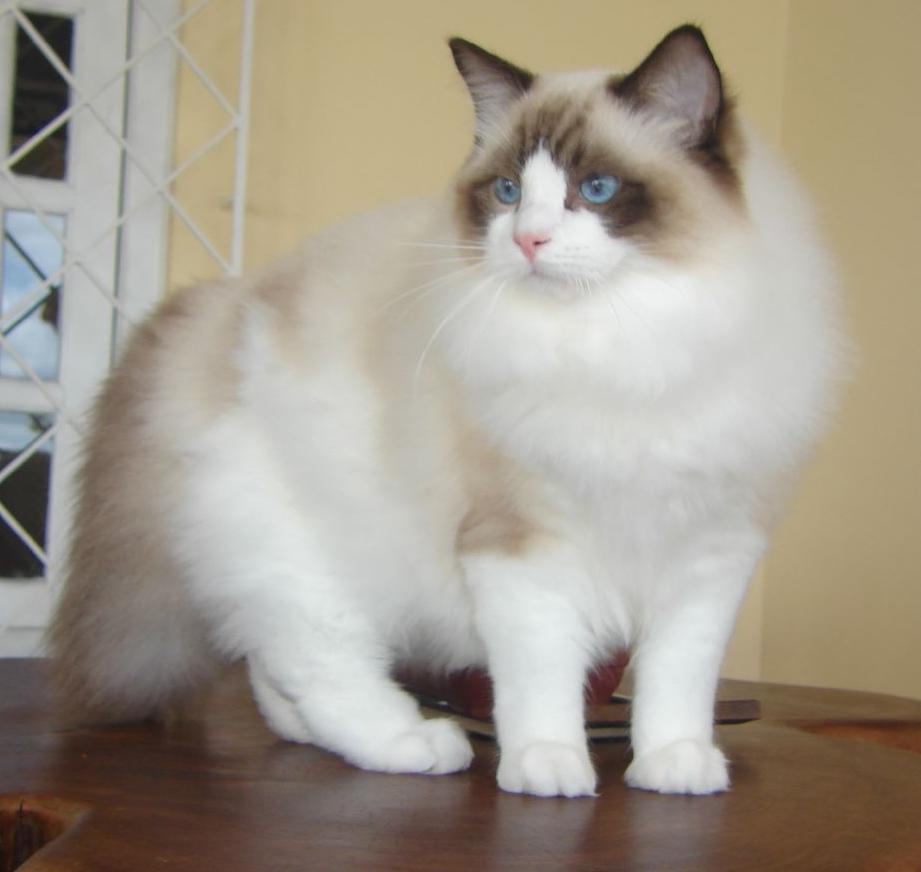
Ragdolls are sold almost entirely on their limp, placid 'floppy' temperament, but that same breed carries a specific inherited heart-disease mutation, and a cat that goes limp when picked up is not proof of good health — it can just as easily mask genuine lethargy from undiagnosed heart disease.
10.31years, life expectancy at birth
1.4 years below the all-cat life expectancy at birth of 11.74.
Measured, not estimated: worked out from 7,936 UK cats that died in 2019 under veterinary care. Based on 69 deaths of this breed. 95% confidence interval 8.86 to 11.76 years. Life expectancy at birth is the average a kitten of this breed could expect; a cat that is already an adult has a longer expected total, because it has got past the risky early years. UK cats, so treat it as the best available figure rather than a promise about yours.
Teng et al. 2024, Journal of Feline Medicine and Surgery 26(5) — open access · figures cited with attribution61.28% of Ragdolls had at least one disorder recorded in 2019.
From the clinical records of 2,025 Ragdolls under veterinary care in the UK that year, read by the Royal Veterinary College’s VetCompass programme.
Most often recorded, 2019
| Disorder | Share of Ragdolls | 95% CI |
|---|---|---|
| Gum disease (periodontal disease) | 8.84% | 7.60–10.08 |
| Diarrhea | 7.11% | 5.99–8.23 |
| Obesity | 6.91% | 5.81–8.02 |
| Overgrown nails | 5.68% | 4.67–6.69 |
| Dental disease | 5.58% | 4.58–6.58 |
| Flea infestation | 4.49% | 3.59–5.40 |
| Vomiting | 4.05% | 3.19–4.91 |
| Coat disorder | 4% | 3.15–4.85 |
| Conjunctivitis | 2.52% | 1.84–3.20 |
| Aggression | 2.17% | 1.54–2.81 |
Age at death in this sample
Median 12.85 years (middle half 5.71 to 16.11), 2019 data. Of the 85 deaths with a recorded cause: Kidney disorder 21.18%, Poor quality of life 12.94%, Lump (mass) 5.88%, Cancer (neoplasia) 5.88%, Airway disorder 5.88%, Traumatic injury 5.88%. Different sample and year from the measured lifespan above, which is why the two numbers differ.
Obesity was recorded in 8.54% of males against 5.09% of females.
“much of the reduced life expectancy in Ragdolls relative to cats overall is likely a consequence of being purebred rather than specifically related to being a Ragdoll compared to any other individual purebred.”— the authors, O'Neill et al. 2025, Companion Animal Health and Genetics 12:8
Health tests to ask the breeder for
There is no CHIC program for cats. These are the DNA and screening tests that the testing laboratories and cat health bodies name for the Ragdoll. A breeder who tests will show the certificates; a DNA result of "clear" for one variant is not a guarantee against the disease.
- Ragdoll HCM (MYBPC3 R820W) DNA test (UC Davis VGL / Langford Vets) screens for hypertrophic cardiomyopathy risk variant; homozygous cats at high risk of severe early disease
- Echocardiogram by a veterinary cardiologist, repeated regularly for breeding cats HCM screening in addition to the DNA test (GCCF)
- PKD1 DNA test (UC Davis VGL / Langford Vets) screens for autosomal-dominant polycystic kidney disease
When to spay or neuter: by five months, whatever the breed. That is the one answer the AVMA, the feline practitioners and AAHA all give, and the spay and neuter page has why, and the two weeks after.
Sources: vgl.ucdavis.edu · vgl.ucdavis.edu · langfordvets.co.uk · gccfcats.org. Checked September 2026. Check a breeder has the questions.
Adopt a Ragdoll near you
Shelters and rescues list Ragdolls and Ragdoll mixes on Petfinder. Enter a ZIP code to see who is waiting within 100 miles.
Listings come from Petfinder and open there. Petipedia does not take part in adoptions and earns nothing from them.
Living with a Ragdoll
Ragdolls really do relax and go limp when held, and they're genuinely easygoing around kids, dogs, and visitors, but 'chill' can tip into low activity, so these cats need active encouragement to play and watching for weight gain. Ask to see current cardiac screening results (not just a verbal promise) for both parents before buying — a sweet temperament says nothing about whether a kitten inherited the breed's heart-disease mutation.
Health you should know about
- Hypertrophic cardiomyopathy (HCM) — a breed-specific MYBPC3 mutation raises the risk of thickened heart muscle that can progress to heart failure; genetic testing exists but shows incomplete penetrance (not every carrier develops disease, and not every affected cat carries the mutation), so echocardiogram screening alongside DNA testing is the standard recommendation for breeding cats.
- Polycystic kidney disease (PKD) has been reported in Ragdolls, most likely inherited from their Persian/Himalayan ancestry, alongside the other breeds that share that lineage.
- Obesity — a large-bodied, lower-energy breed that needs deliberate portion control to avoid extra joint and cardiac strain.
Read the full Cat Care Guide first — costs, daily time, and everything a cat needs before you choose a breed.
Sources — 5 references
Last reviewed October 2026. 5 sources listed below. Written and maintained by Petdeals.io. General care information, not veterinary advice — for a sick animal, call a vet.