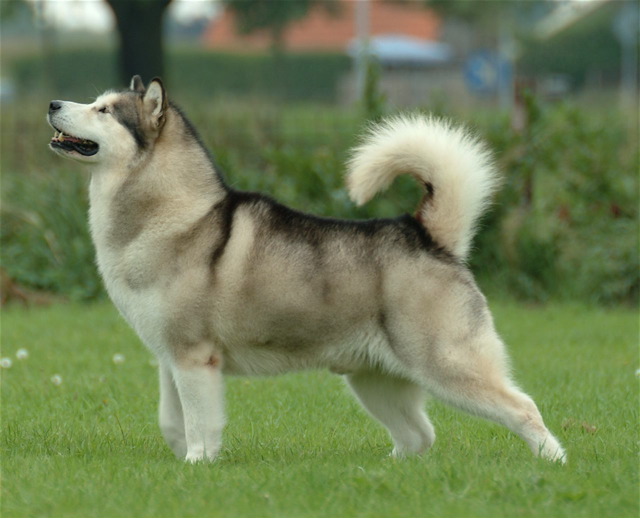
This is not a bigger husky you can keep quiet in an apartment: Malamutes are powerful, determined escape artists with a strong prey drive toward cats and small dogs, they blow their entire undercoat out twice a year in dramatic fashion, and the same Arctic coat that looks glamorous means they genuinely struggle and can overheat in an average summer.
11.3years, median
1.2 years below the all-dog median of 12.5.
Measured, not estimated: the middle age at death across 584,734 UK dogs, 284,734 of them deceased. Based on 2,822 dogs of this breed. 95% confidence interval 11.1 to 11.8 years. Half lived longer than this, half did not. UK dogs, so treat it as the best available figure rather than a promise about yours.
In the same study, large breeds as a group had a median of 11.9 years and medium-muzzled breeds 12.8. This breed is large and medium-muzzled.
McMillan et al. 2024, Scientific Reports 14:531 — open access · CC BY 4.0No VetCompass paper of its own yet, but the breed was one of 29 in a 2026 giant-breeds study.
In 2019, 3,702 Alaskan Malamutes were among 28,345 giant-breed dogs under veterinary care in the UK, 13.1% of that group. Median age at death for the breed was 11.2 years, from 136 deaths.
Across all 29 breeds pooled, 73.8% of the 4,316 dogs reviewed had at least one disorder recorded that year. The most common were Ear infection (otitis externa) 8.16%, Overweight or obese 8.02%, Aggression 5.56%. Pooled median age at death was 8.94 years (middle half 6.96 to 10.9). The paper gives no disorder figures for this breed on its own.
Health tests to ask the breeder for
Alaskan Malamute Club of America sets the tests a Alaskan Malamute needs for a CHIC number in the OFA's open database. A CHIC number means the tests were done and the results are public. It does not mean the dog passed them: ask for the results for both parents, or look them up yourself on ofa.org.
- Hip Dysplasia (OFA Evaluation or PennHIP Evaluation)
- Eye Examination by a boarded ACVO Ophthalmologist
- Alaskan Malamute Polyneuropathy (AMPN) DNA test
When to spay or neuter: the guidelines split at 45 pounds grown, five to six months under it and after growth is complete over it, and the UC Davis study gives a guideline by breed for 35 breeds. The spay and neuter page has both, and the two weeks after.
- Elbow Dysplasia (OFA Evaluation)
- Cardiac Evaluation (congenital heart disease screening)
- Autoimmune Thyroiditis (OFA evaluation)
- Cone Degeneration DNA test
- Primary Ciliary Dyskinesia DNA test
Test names as the club lists them; checked September 2026. OFA CHIC breed page. How to use this at the breeder: check a breeder.
Adopt a Alaskan Malamute near you
Shelters and rescues list Alaskan Malamutes and Alaskan Malamute mixes on Petfinder. Enter a ZIP code to see who is waiting within 100 miles.
Listings come from Petfinder and open there. Petipedia does not take part in adoptions and earns nothing from them.
Living with a Alaskan Malamute
Malamutes were bred to haul heavy loads long distances and need serious daily exercise or they become destructive, vocal, and determined to escape — a secure, dug-proof fence is a real requirement, not a nice-to-have. Expect overwhelming shedding twice a year (fur on everything, constantly), a dog that 'talks' rather than barks much, and one that genuinely does not do well in hot climates despite being an outdoor-looking breed.
Health you should know about
- Hip and elbow dysplasia — hereditary joint malformation common in large working breeds.
- Hypothyroidism — an underactive thyroid gland requiring lifelong medication once diagnosed.
- Chondrodysplasia — an inherited disorder causing dwarf-like, malformed limbs, specific to a handful of northern breeds including the Malamute.
- Polyneuropathy — an inherited nerve disorder documented in the breed that can cause weakness, exercise intolerance, and voice changes.
Read the full Dog Care Guide first — costs, daily time, and everything a dog needs before you choose a breed.
Sources — 3 references
Last reviewed October 2026. 3 sources listed below. Written and maintained by Petdeals.io. General care information, not veterinary advice — for a sick animal, call a vet.